Last reviewed: August 20, 2026


This guide is for Filipino bookkeepers and other non-CPA professionals who are considering applying for accreditation as an individual Tax Agent/Practitioner with the Bureau of Internal Revenue (BIR).

It explains who may qualify, why accreditation can be valuable, what documents to prepare, how the application works, and what BIR accreditation does — and does not — authorize you to do.

Quick Answer

Can a non-CPA become a BIR-accredited Tax Practitioner?

Yes. BIR regulations provide a route for qualified individuals who are not CPAs to become accredited Tax Agents/Practitioners, provided they satisfy the applicable educational, tax-training, competence, moral-character and other requirements.

BIR Tax Practitioner Accreditation at a Glance

  • Non-CPAs Can Apply

    Qualified non-CPAs and bookkeepers may apply for BIR Tax Practitioner accreditation.

  • Use BIR Form 1916

    Individual applicants use BIR Form No. 1916 — Tax Practitioner’s Application for Accreditation.

  • 18 Accounting/Tax Units

    For the applicable non-CPA bachelor’s-degree route, the regulations require at least 18 units in accounting and/or taxation.

  • 18 Hours of Tax Training

    The regulations provide for 18 hours tax training, with supporting certificate, taken within one year from date of application with the BIR.

  • ₱1,000 Application Fee

    The governing accreditation regulations prescribe a ₱1,000 non-refundable processing fee paid to the BIR.

  • Valid for 3 Years

    Once approved, the BIR Certificate of Accreditation is generally valid for 3 years from the date of issue, unless sooner revoked for cause.

In This Guide

  • Benefits of BIR Accreditation
  • Is BIR Accreditation Right for You?
  • Who Can Apply?
  • Educational Requirements
  • Tax Training Requirement
  • BIR Form 1916
  • Documentary Requirements
  • Step-by-Step Application Process
  • Sample Documents
  • What If You Don’t Have an ITR?
  • BIR Accreditation vs. Self-Employed Registration
  • What You Can and Cannot Do Once Accredited
  • 2026 SEC ₱3 Million Audit Threshold
  • Validity and Renewal
  • Frequently Asked Questions
  • Official References
  • 24-Hour Tax Training Bundle

Why Become a BIR-Accredited Tax Practitioner?

If you already work in bookkeeping, taxation or business compliance, BIR accreditation can help you develop your professional practice beyond routine bookkeeping.

It does not make you a CPA. It does, however, formally recognize you as an accredited Tax Agent/Practitioner for purposes covered by the BIR accreditation regulations.


1. You can represent taxpayers before the BIR

One of the most important benefits is the ability of accredited Tax Agents/Practitioners to represent taxpayers and transact covered official business with the BIR on their behalf.

The regulations allow the BIR to refuse to transact official business with tax practitioners who are not accredited for transactions requiring accredited representation.


2. You can expand the tax-compliance services you offer

A bookkeeper may already assist clients with records, deadlines and routine compliance.

BIR accreditation can allow a qualified practitioner to become more involved in covered BIR transactions, correspondence and taxpayer representation, subject to the limits of the accreditation and other professional laws.


3. You obtain a formal professional credential

Accredited practitioners receive a BIR Accreditation Number together with the issuance and expiry details of their accreditation.

For a bookkeeper developing a professional practice, this provides a meaningful distinction from someone who simply advertises bookkeeping or tax services without having gone through the BIR accreditation process.


4. You can become more useful to existing clients

Many small businesses need continuing assistance not only with bookkeeping but also with taxation and BIR compliance.

The ability to assist with a broader range of covered tax matters can strengthen your relationship with clients and reduce the number of separate service providers they may need.


5. You can professionalize and develop your practice

Accreditation provides a pathway for qualified non-CPA bookkeepers who want to build deeper competence in taxation and develop a more specialized tax-compliance practice.

It may also help you position your services around a combination of:

Bookkeeping + tax compliance + BIR representation

rather than bookkeeping alone.


6. It may create additional service opportunities among micro and small businesses

There is an important related development in 2026.

2026 SEC Update: Higher Threshold for Mandatory External Audits

SEC Memorandum Circular No. 4, Series of 2026 increased the general audit threshold for stock and non-stock corporations from ₱600,000 to ₱3,000,000 in total assets or total liabilities.

Corporations at or below the applicable threshold generally do not need to submit audited financial statements to the SEC solely because of that SEC threshold. Instead, they submit financial statements accompanied by a sworn Statement of Management's Responsibility (SMR) signed by the appropriate corporate officers.

For stock and non-stock corporations, the required management signatories include the Chairman of the Board, President or CEO, and Treasurer or CFO, duly authorized by the Board. For a One Person Corporation, the President and Treasurer sign.

This potentially reduces the external-audit burden for many micro corporations and may increase demand for competent bookkeeping, financial-record and tax-compliance assistance.


NOTE:  this does NOT allow a non-CPA to act as an external auditor

BIR accreditation does not authorize a non-CPA Tax Agent to sign an Auditor's Certificate.

The Philippine Accountancy Act also regulates the practice of public accountancy, including certain preparation, signing and certification of financial statements for clients.


Important distinction between SEC and BIR rules:

The SEC audit threshold is based on total assets or total liabilities.

The BIR/Tax Code audit rule is separate. Section 232 of the Tax Code provides for an independent CPA audit where gross annual sales, earnings, receipts or output exceed ₱3 million.

Therefore, a corporation might fall below the SEC audit threshold while still being subject to a separate CPA-audit requirement for BIR purposes.


Bottom line: BIR accreditation strengthens a non-CPA's tax-practice capabilities. It does not convert the practitioner into a CPA or external auditor.


Is BIR Accreditation Right for You?

You may want to consider accreditation if you:

  • already work as a freelance or employed bookkeeper;
  • assist several businesses with tax compliance;
  • prepare or help clients with BIR filings and requirements;
  • intend to build your own bookkeeping or tax-compliance practice;
  • want to represent clients in covered transactions before the BIR; or
  • want to develop a more formal specialization in Philippine taxation.

Who Can Apply for BIR Tax Practitioner Accreditation as a Non-CPA?

The governing BIR regulations prescribe specific qualifications for individual Tax Agents who are not members of the Philippine Bar.

1. Check your educational qualification first

Revenue Regulations No. 11-2006 refers to a non-CPA applicant who has obtained at least:

  • a degree in Law, Juris Doctor (JD), or its equivalent; or
  • a Bachelor's degree in Arts, Commerce or Business Administration with at least 18 units in accounting and/or taxation from a recognized institution.


Because modern degree names do not always exactly match the terminology used in the older regulation, applicants whose degree title differs should ask the appropriate RRAB whether their academic qualification will be accepted rather than simply assuming that it qualifies.

Start with your Transcript of Records

Your Transcript of Records is therefore one of the first documents you should examine.

Count your accounting and taxation subjects and corresponding units before spending heavily on notarization and other application costs.


2. You must demonstrate competence in taxation

The regulations require non-CPA applicants to demonstrate special competence in tax matters or tax practice.

Evidence can involve tax-related knowledge, experience, training, seminars and similar competence, subject to evaluation by the Accreditation Board.

Is one year of bookkeeping or tax experience required?

No fixed one-year practical-experience requirement appears in the governing national accreditation regulations.

Experience may be relevant in demonstrating competence, but applicants should not be told that everybody must first complete one year of bookkeeping or tax-compliance work before they can apply.


3. Complete the required taxation training

Revenue Regulations No. 14-2010 provides for a total of at least 18 hours of continuing professional education/training in taxation.

Training may come from:

  • BIR Revenue Regions or Revenue District Offices; or
  • private institutions such as tax or auditing firms, educational or training institutions and professional organizations.


The training certificate should show the:

  • course or training title;
  • date;
  • number of training hours; and
  • training provider.


The regulations specify that the supporting certificates should have been obtained not more than one year before the application or renewal.

Does the private training provider need to be “BIR accredited”?

Revenue Regulations No. 14-2010 states that accreditation of CPE providers and events is no longer required.

Private institutions may provide tax training contemplated by the regulation, although the applicant's qualification and supporting documentation remain subject to evaluation by the appropriate BIR Accreditation Board.


4. You must be of good moral character

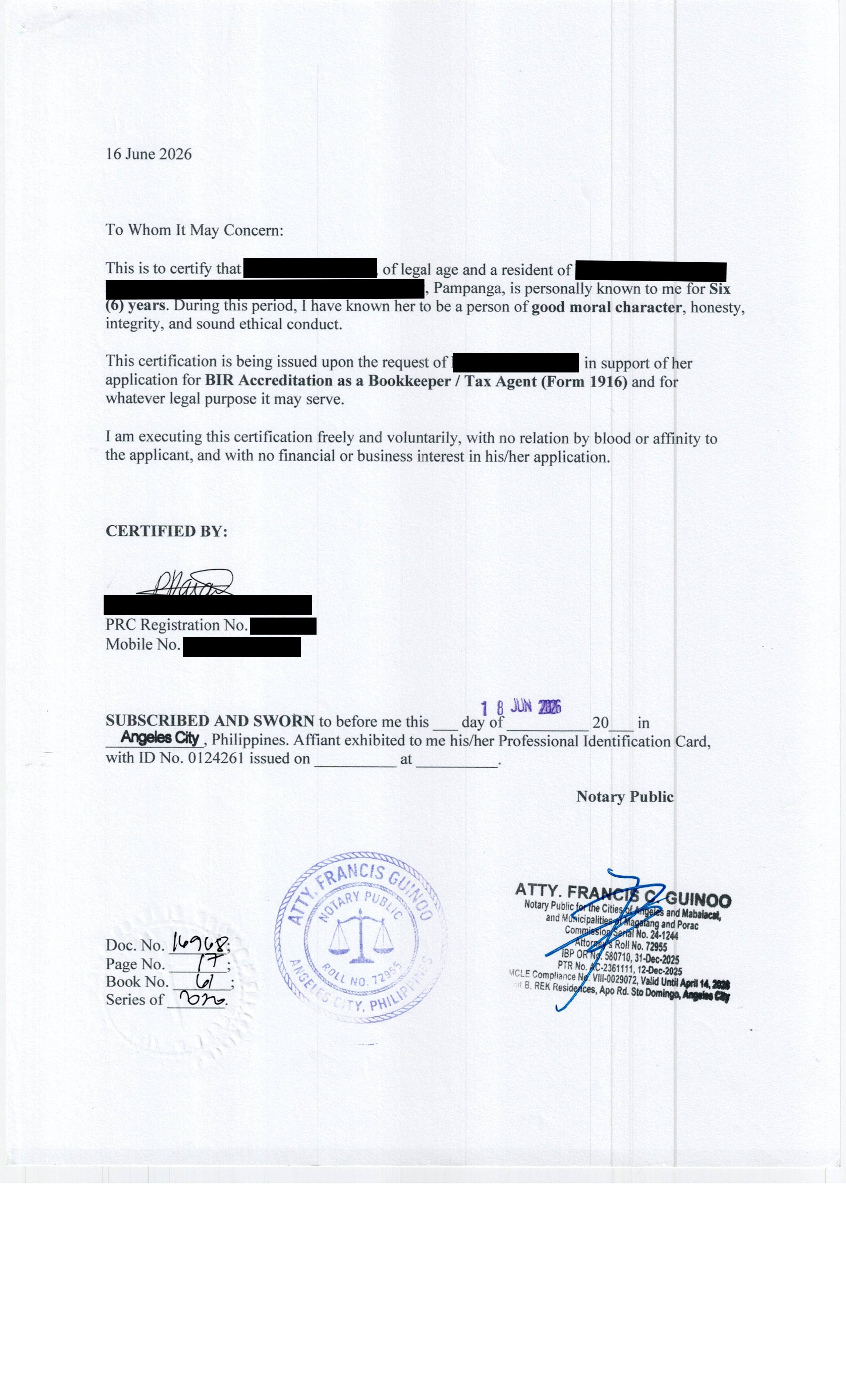
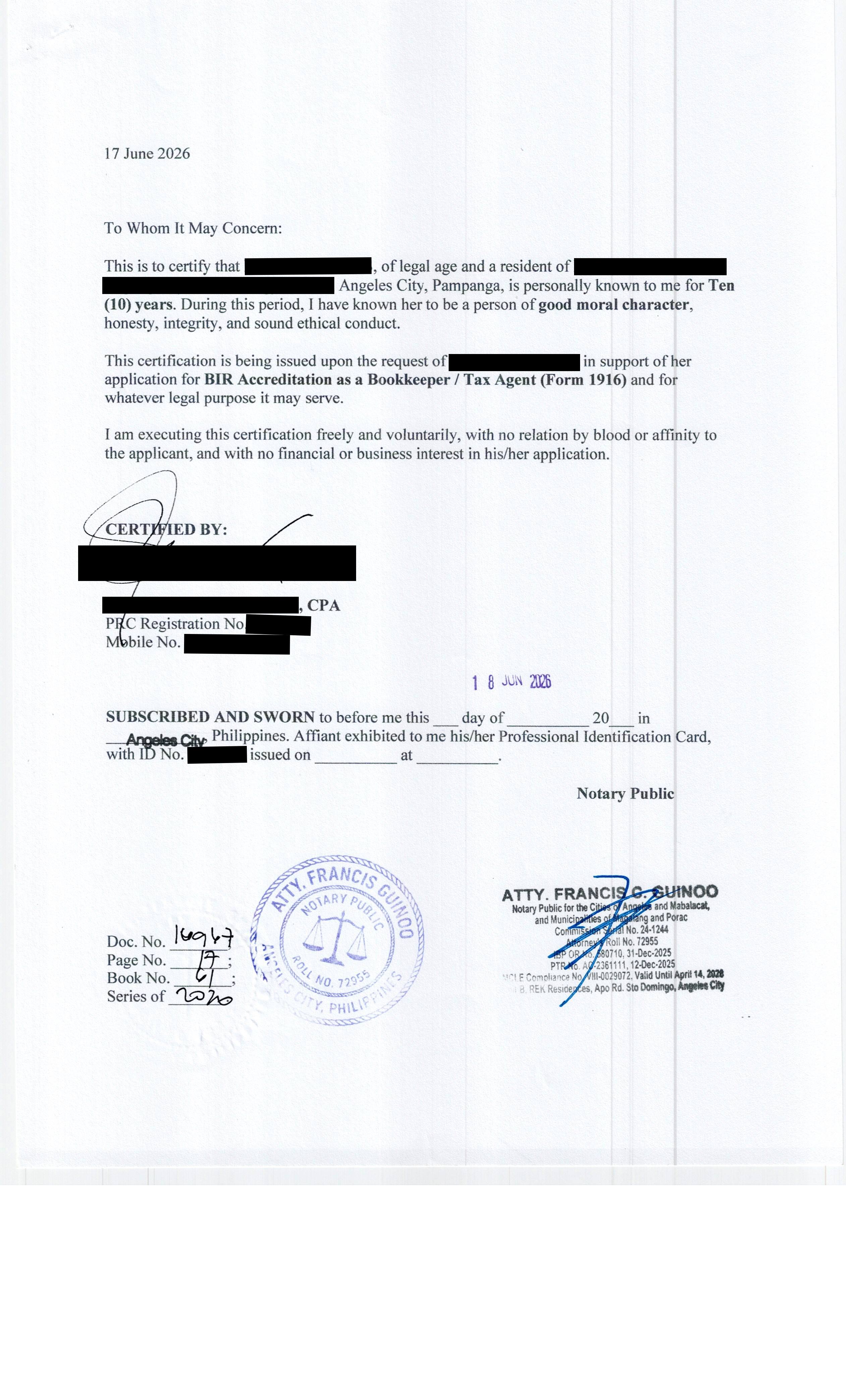
The regulations require a Certificate of Good Moral Character issued under oath by two disinterested persons who are either:

  • members of the Philippine Bar; or
  • Certified Public Accountants in good standing.


You therefore need two separate qualified persons to issue the certifications.


5. Other minimum qualifications also apply

The governing rules include citizenship and character-related qualifications, including requirements relating to disqualifying convictions or findings involving moral turpitude or Tax Code offenses.

Applicants should disclose information truthfully in Form 1916 and verify any unusual circumstances with the Accreditation Board handling their application.

How to Apply for BIR Tax Practitioner Accreditation as a Non-CPA


Step 1 — Review Your Transcript of Records

Check whether your academic records satisfy the applicable educational requirement and whether your TOR reflects at least 18 units in accounting and/or taxation for the bachelor's-degree route.

If your degree title or subjects do not clearly fit the wording of the regulation, contact the RRAB before spending money on the rest of the application.

Step 2 — Complete Your Tax Training

Complete the required taxation training and obtain documentation showing the titles, dates and number of training hours.

Because the certificates used for accreditation must satisfy BIR recency requirements, it makes sense to complete the training reasonably close to the time you plan to file your application.

Need to complete your tax-training hours?

UpCredential offers a BIR Tax Practitioner Accreditation Bundle providing 24 hours of tax training that can be taken online and at your own pace.

Step 3 — Accomplish BIR Form 1916

Individual applicants use:

BIR Form No. 1916

Tax Practitioner's Application for Accreditation — Individual

The form asks for information including your:

  • TIN;
  • citizenship;
  • name and business address;
  • educational attainment;
  • examinations or qualifications;
  • professional practice;
  • seminars or training in taxation;
  • professional-organization membership, where applicable;
  • character references; and
  • criminal-conviction disclosure.


Make sure the information in the form is consistent with the supporting documents you submit.


Step 4 — Prepare the Core Documentary Requirements

Based on the national accreditation regulations, important requirements for a non-CPA individual applicant include:


Certified Transcript of Records

A certified copy of your TOR should demonstrate compliance with the applicable accounting and/or taxation-unit requirement.


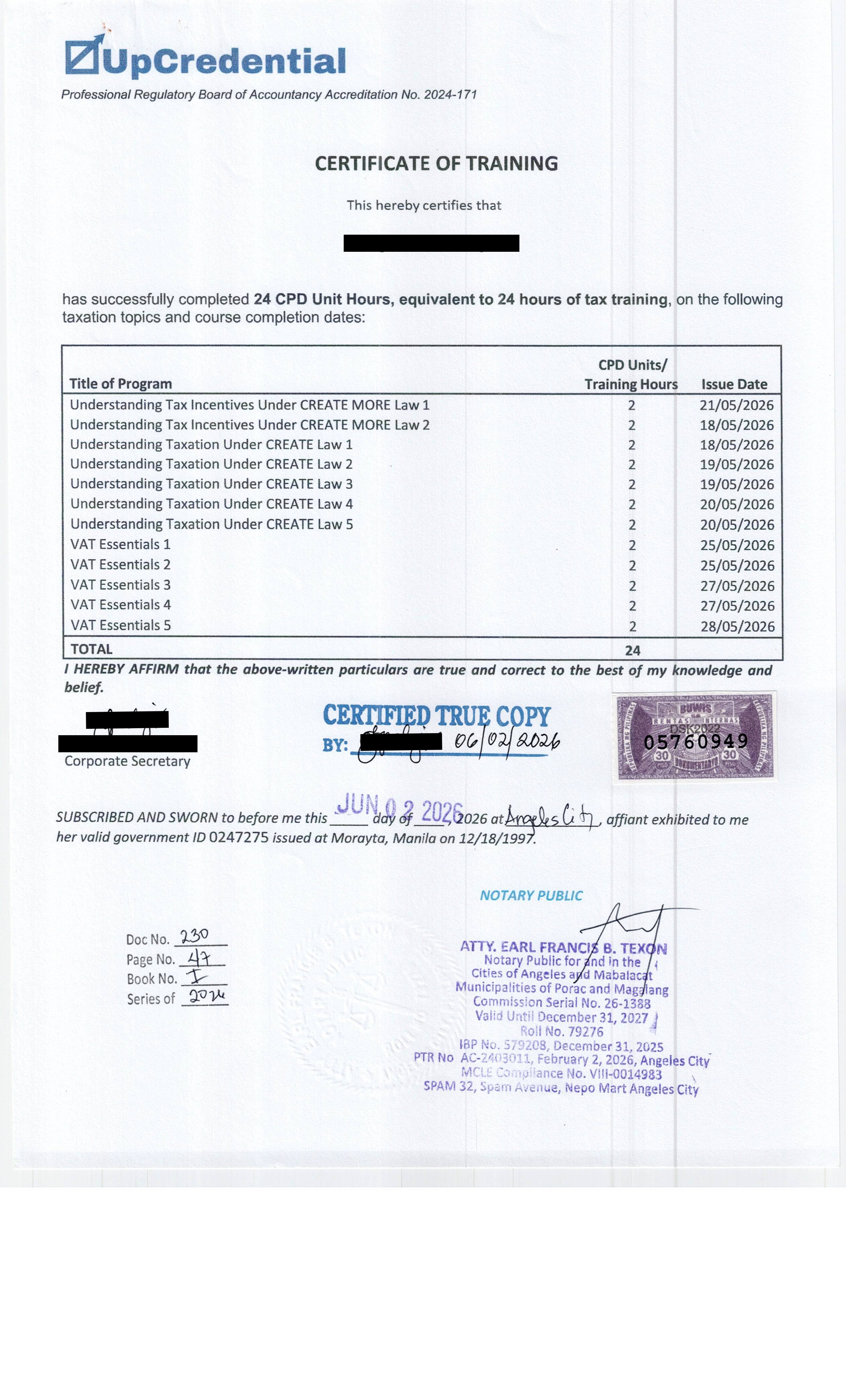
Tax-training certification

Prepare written certification showing the required taxation CPE/training, including the course titles, dates and number of hours.


Two Certificates of Good Moral Character

These should come from two disinterested qualified persons who are either lawyers or CPAs in good standing.


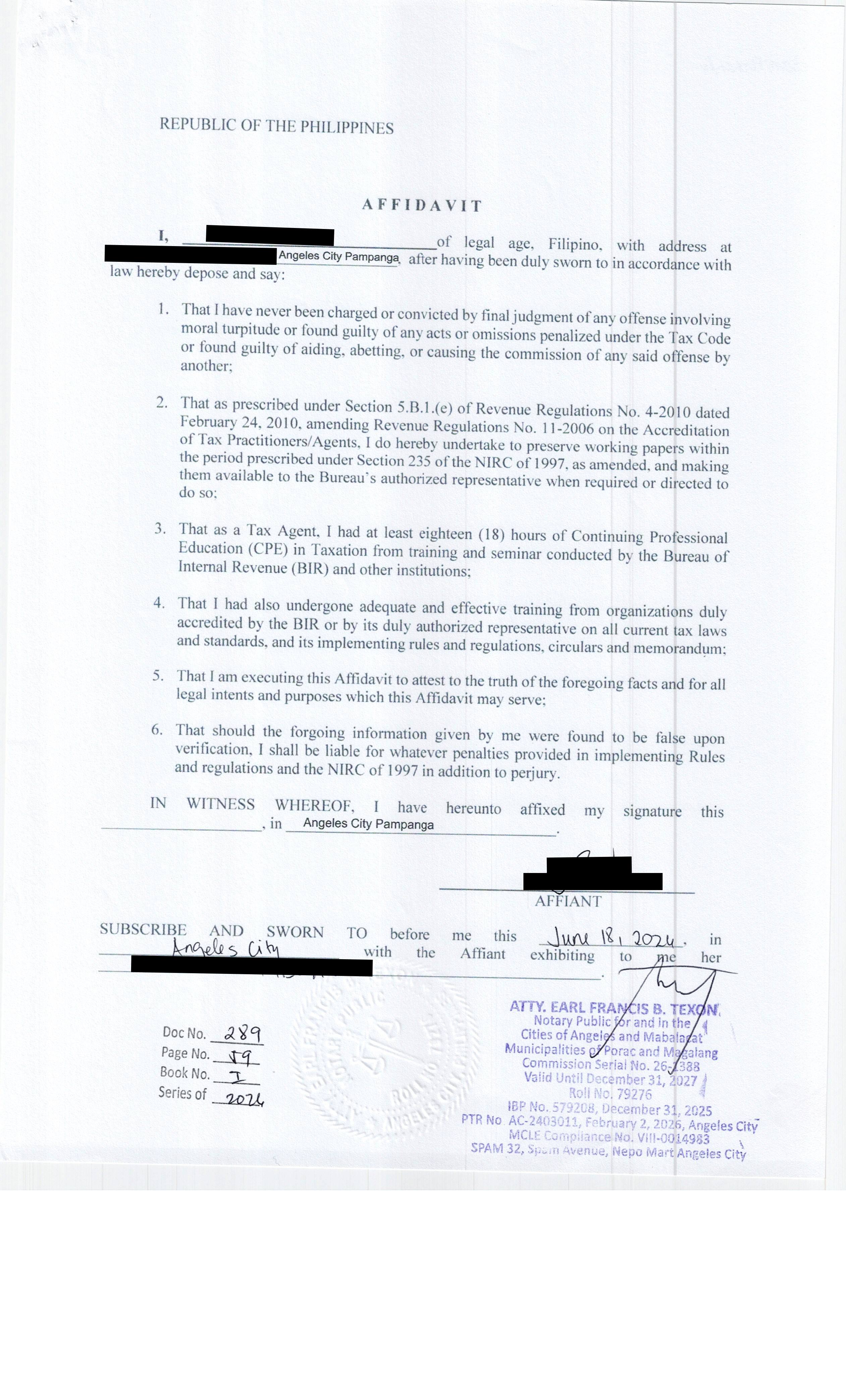
Sworn undertaking regarding working papers

The regulations require a written undertaking under oath to preserve working papers for the period prescribed by the Tax Code and make them available to authorized BIR representatives when required.


BIR Form 1916

Submit the duly accomplished individual application form.


Processing fee

Revenue Regulations No. 4-2010 prescribes a ₱1,000 non-refundable processing fee.

Confirm the current payment procedure with the receiving BIR office before paying.


Step 5 — Ask Your RRAB for Its Current Checklist

This is extremely important.

The national regulations provide the core legal requirements, but a particular Revenue Region may ask for additional supporting documents or use its own current receiving checklist.

Depending on your situation and the office processing the application, you may be asked for additional documents such as:

  • a certified copy of your diploma;
  • government identification;
  • BIR registration documents;
  • Income Tax Returns or Form 2316;
  • proof relating to your tax practice or employment;
  • affidavits;
  • documentary stamps; or
  • other documents requested during evaluation.

A useful question to ask the receiving office is:

“I am applying for individual BIR Tax Practitioner Accreditation as a non-CPA using Form 1916. May I please request your latest checklist and current submission and payment procedure?”


Step 6 — File With the Appropriate Accreditation Board

Applications are filed with the appropriate Revenue Regional Accreditation Board (RRAB) or Revenue National Accreditation Board (RNAB) according to the jurisdiction rules.

For individual applicants, the RRAB normally handles applications based on the applicant's principal residence or place of business, subject to the governing rules.

Do not simply assume that the application should be submitted to an ordinary RDO counter. Ask your Revenue Region where its Tax Practitioner Accreditation applications are currently received.


Step 7 — BIR Evaluates the Application

The Accreditation Board reviews:

  • your qualifications;
  • the completeness of your documents;
  • your educational background;
  • your taxation training; and
  • other supporting information.


The Board may request clarification or additional documents.

Under RR No. 4-2010, applications are to be acted upon within 30 days from receipt of the complete application.

The word complete matters. Missing requirements may delay when the application is considered ready for processing.


Step 8 — Receive Your Certificate of Accreditation

If approved, you are issued a BIR Certificate of Accreditation.

How long is BIR Tax Practitioner Accreditation valid?

Three years from the date of issue, unless sooner revoked for cause.

Your accreditation details include your BIR Accreditation Number and validity period.

Sample Documents for Non-CPA BIR Accreditation

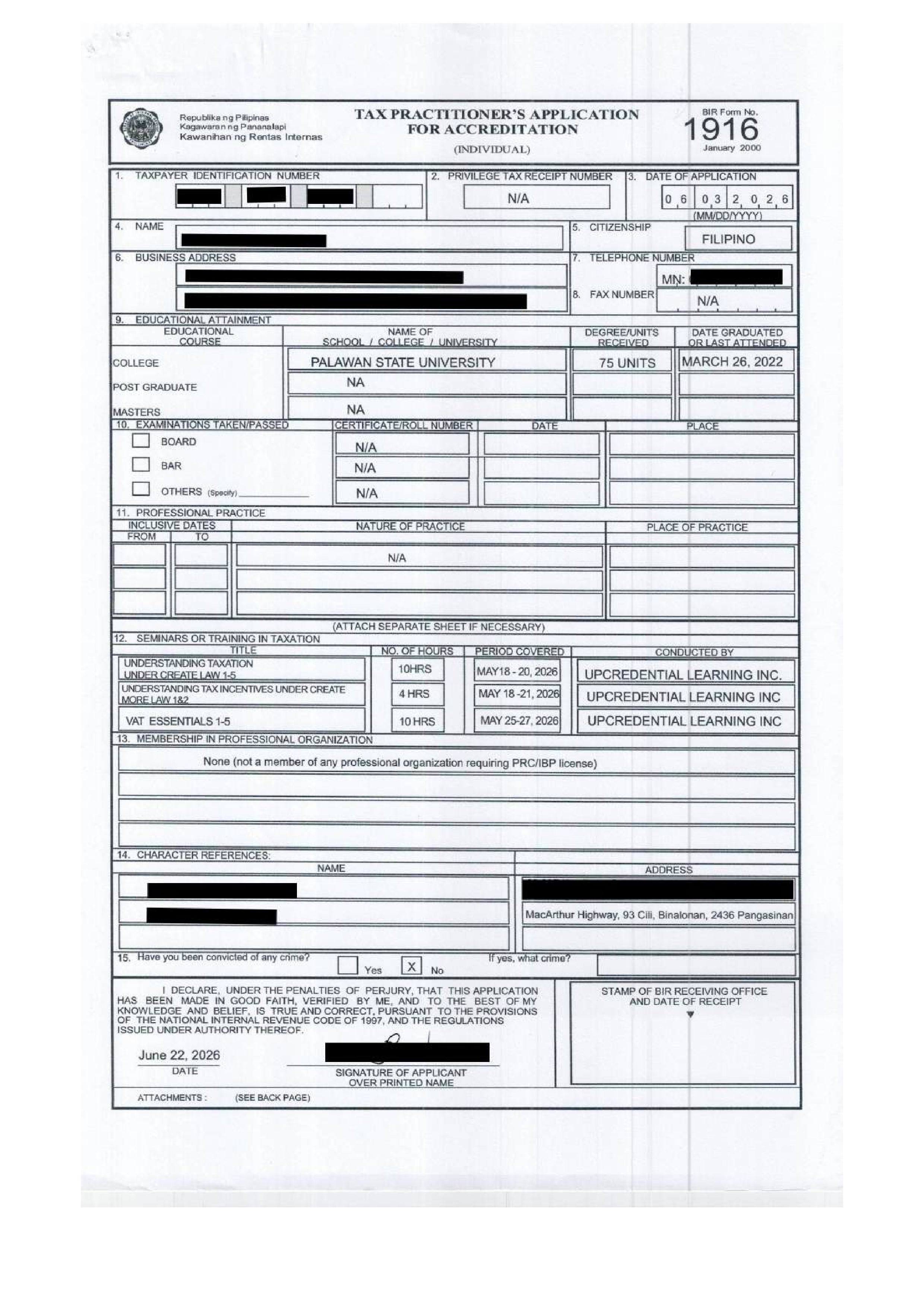
Sample 1 — Accomplished BIR Form 1916

Sample 2 — Certificate of Good Moral Character


Sample 3 — Second Certificate of Good Moral Character


Two certifications are required.


Sample 4 — Sworn Undertaking to Preserve Working Papers

Sample 5 — Written Tax-Training Certification


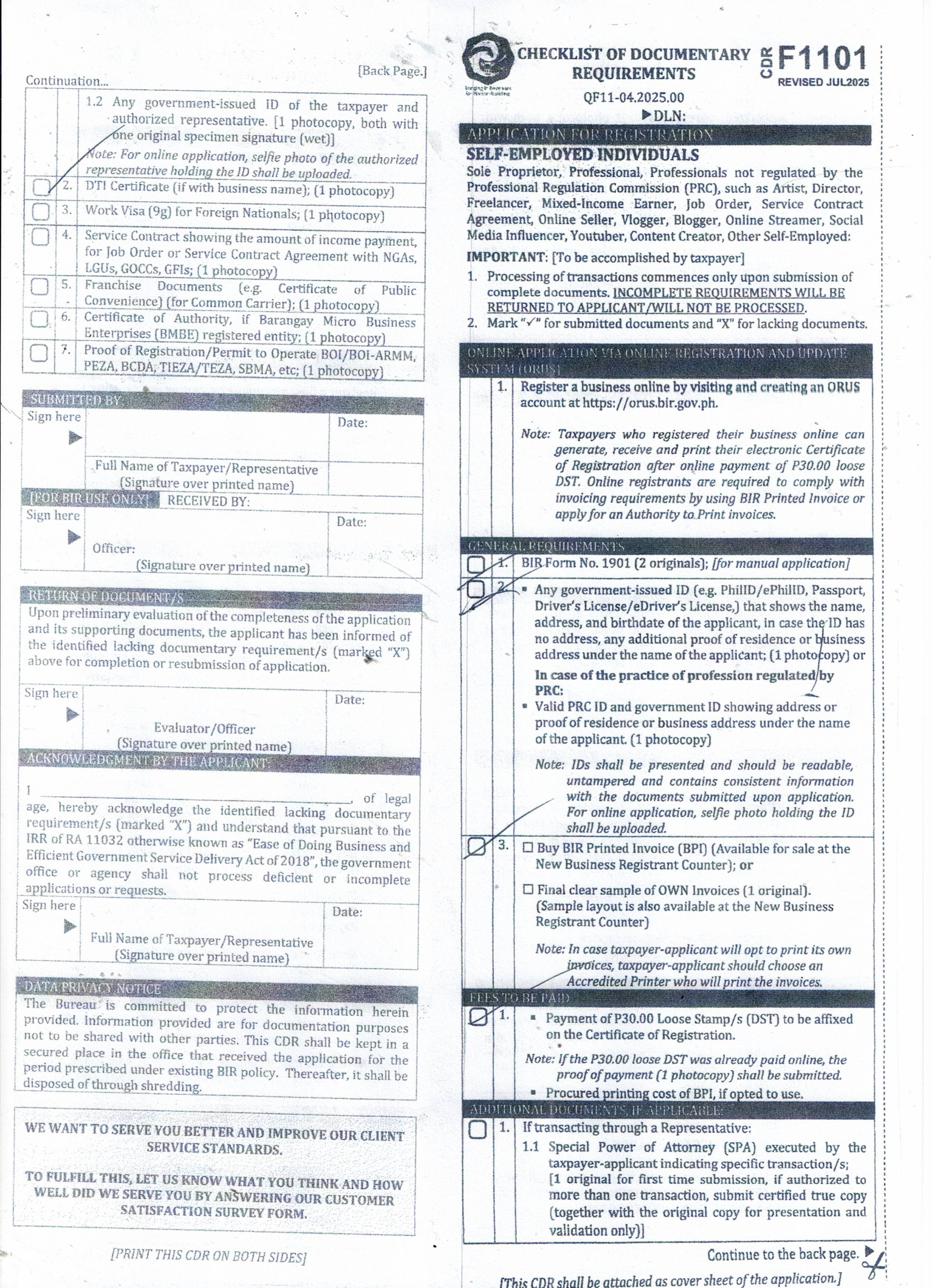
Sample 6 - Checklist of Requirements from BIR


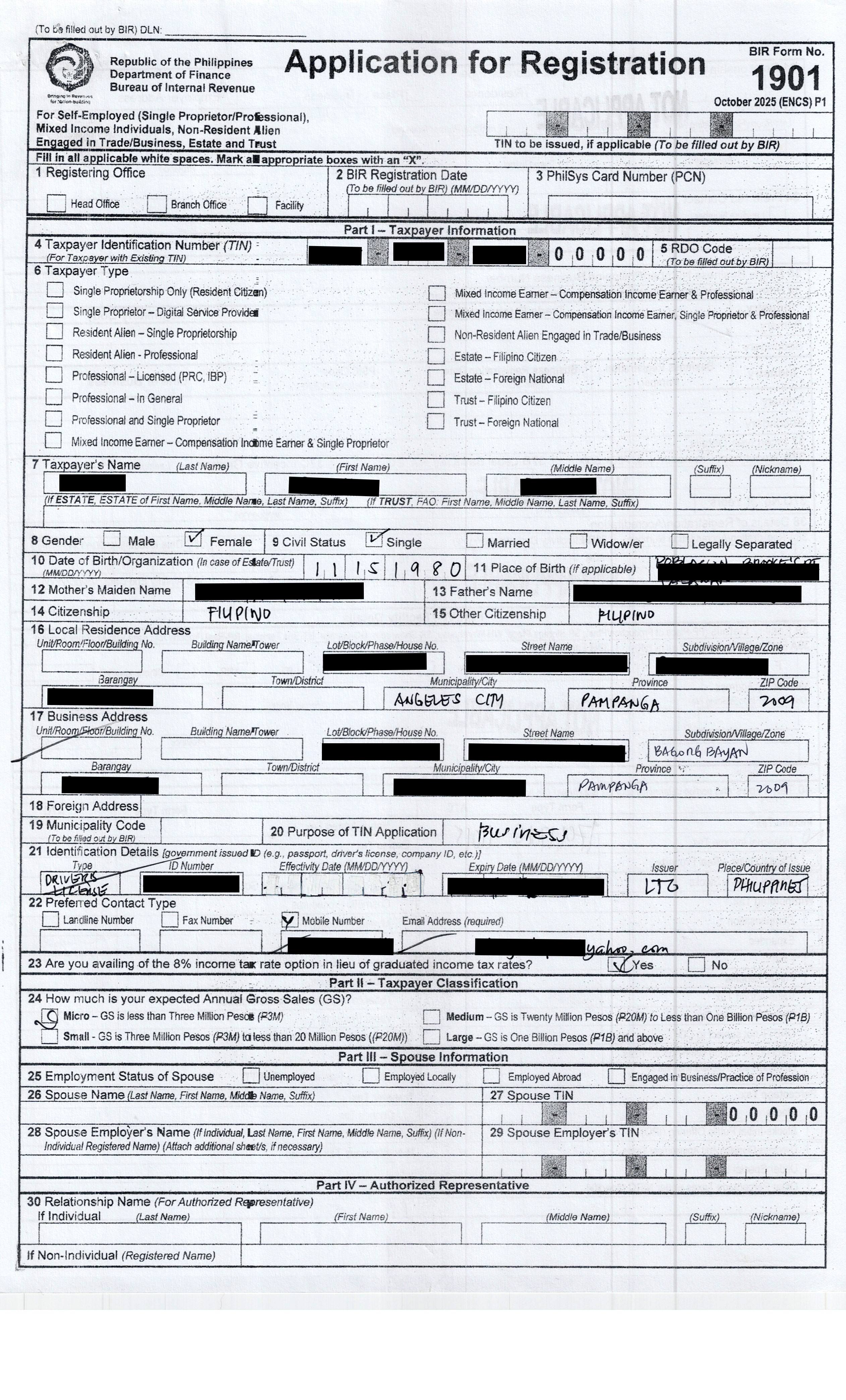
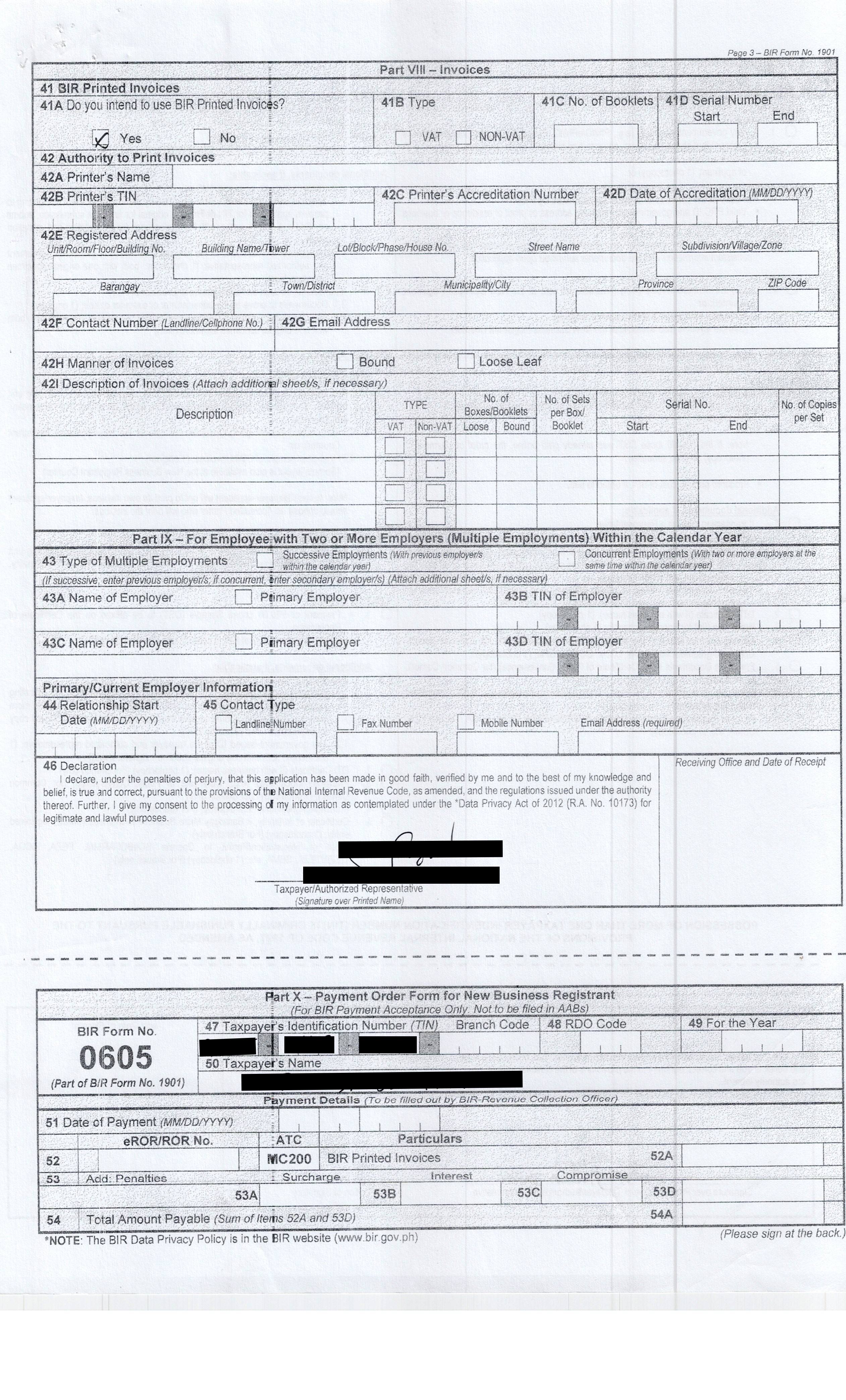
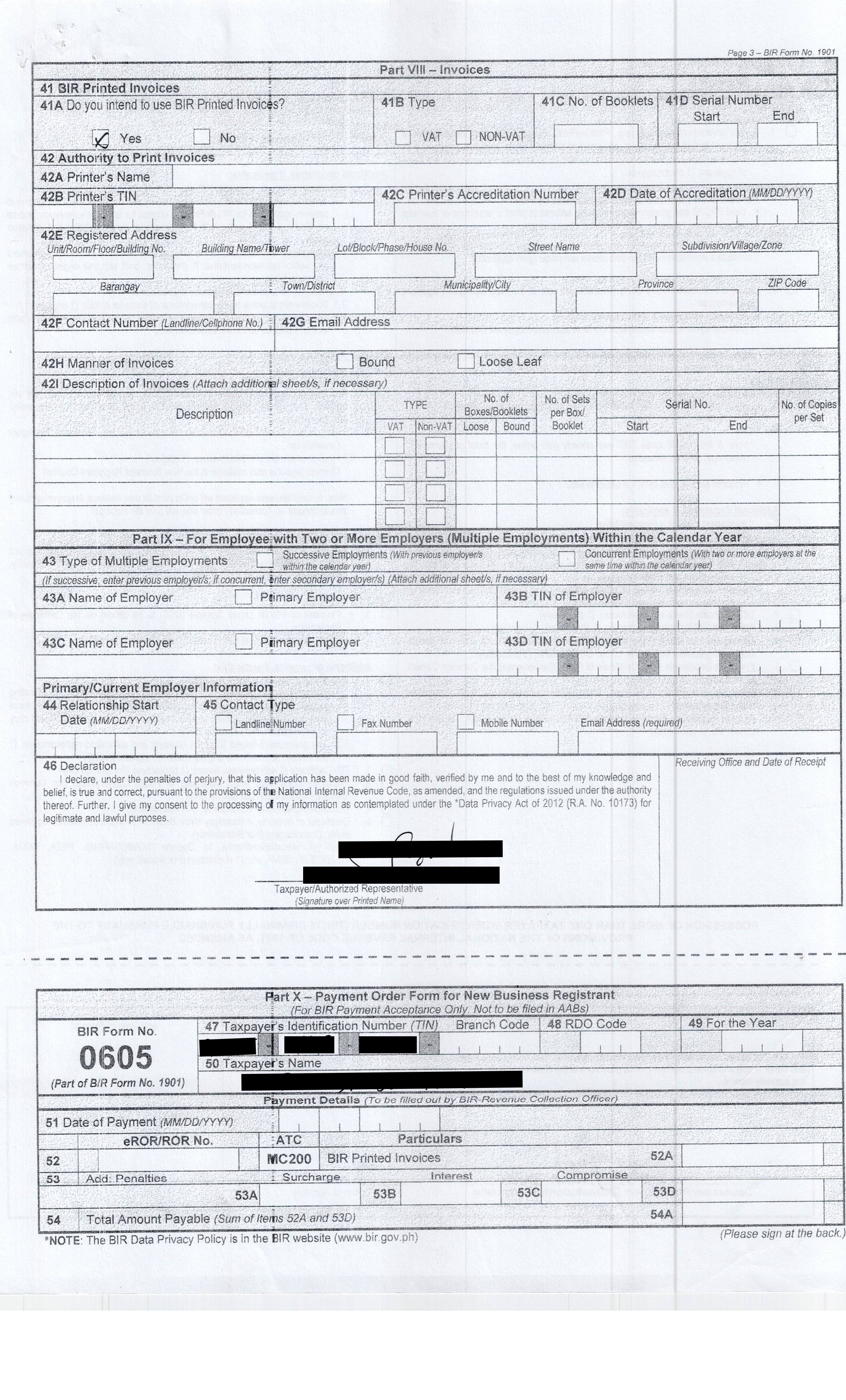
Sample 7 - Additional requirements when setting up your own Bookkeeping business and  BIR Form 1901


What If I Don't Have an ITR?

Do not panic merely because a local checklist asks for an ITR that you do not have.

First determine why you do not have one.

For example, an actual applicant may have had no income or may not have practiced during the relevant period.

One real application packet reviewed for this guide included a notarized affidavit explaining why the applicant could not provide the requested return.

That is useful as a sample, but it should not be treated as a nationwide rule.

Ask your RRAB what document or explanation it will accept for your circumstances.

BIR Tax Practitioner Accreditation vs. Registering as a Self-Employed Bookkeeper

These are related, but they are not the same process.

BIR Tax Practitioner Accreditation

Self-Employed / Professional Registration

Concerns your accreditation as a Tax Agent/Practitioner

Concerns your registration as a taxpayer/professional business

Individual application uses BIR Form 1916

Registration generally involves BIR Form 1901

Results in a Tax Practitioner Certificate of Accreditation

Results in taxpayer/business registration

Governed by the Tax Practitioner accreditation regulations

Governed by taxpayer-registration and invoicing rules

If you establish your own professional practice and bill clients, separate BIR taxpayer-registration and invoice requirements may apply.

Do not confuse those requirements with Form 1916 accreditation.

What Can an Accredited Non-CPA Tax Practitioner Do?

BIR accreditation permits qualified practitioners to represent taxpayers and transact covered official business with the BIR on behalf of taxpayers under the accreditation rules.

In covered filings and representations, the practitioner's BIR accreditation information may be required together with the practitioner's signature.

What accreditation does NOT do

It does not make you a CPA

A BIR accreditation certificate is not a CPA license.

It does not authorize you to conduct an independent financial-statement audit

RR No. 4-2010 expressly provides that accredited non-CPAs are not authorized to sign the financial statements' Auditor's Certificate, even for BIR purposes.

It does not override the Philippine Accountancy Act

Professional activities reserved to licensed CPAs remain subject to the Philippine Accountancy Act and other applicable regulations.

How Does the New ₱3 Million SEC Audit Threshold Affect Bookkeepers?

For fiscal years covered by SEC Memorandum Circular No. 4, Series of 2026, the SEC's general mandatory-audit threshold for stock and non-stock corporations was increased to more than ₱3 million in total assets or total liabilities.

Corporations at or below the threshold generally submit unaudited financial statements accompanied by a sworn Statement of Management's Responsibility rather than an external auditor's report, unless another rule or classification requires an audit.

This change may create additional opportunities for competent bookkeeping and financial-record services among micro corporations.

However:

  • the company's authorized management officers — not an outside non-CPA acting as an auditor — sign the required SMR;
  • BIR accreditation does not grant external-audit authority; and
  • a separate Tax Code rule may still require an independent CPA audit where gross annual sales, earnings, receipts or output exceed ₱3 million.

Always check both the SEC and BIR requirements applicable to the particular taxpayer.

Maintaining and Renewing Your Accreditation

A BIR Tax Practitioner Certificate of Accreditation is generally valid for three years.

An accredited practitioner may apply for renewal within 60 days before the accreditation expires.

Renewal involves updated qualifications and documentation, including the applicable taxation-training requirement and other records prescribed by the BIR.

Because payment procedures and administrative requirements can change, request the latest renewal checklist from your RRAB before filing.

FAQ

  • Can a bookkeeper become a BIR-accredited Tax Practitioner?

    Yes. A qualified non-CPA bookkeeper may apply if he or she satisfies the applicable qualifications and documentary requirements.

  • Do I have to be a CPA?

    No. The regulations expressly contemplate individual Tax Agents who are not CPAs.

  • Do I need one year of bookkeeping experience?

    There is no general one-year minimum stated in the governing national accreditation regulations. Experience may be relevant to demonstrating competence, but there is no universal “one year of experience” rule.

  • How many accounting or taxation units do I need?

    For the applicable non-CPA bachelor's-degree route, the regulations refer to at least 18 units in accounting and/or taxation.

  • What if my degree title is not exactly “Arts, Commerce or Business Administration”?

    Do not assume either eligibility or ineligibility solely from the modern title of your degree. Ask the RRAB handling the application to evaluate your academic records against the regulatory qualification.

  • How many hours of tax training do I need?

    BIR requires a total of 18 hours of training in taxation, taken within one year from the date of your application.

  • Does my training provider have to be BIR accredited?

    RR No. 14-2010 states that accreditation of CPE providers and events is no longer required. The regulations contemplate taxation training from both BIR offices and private institutions. Final evaluation of the applicant and supporting documentation remains with the appropriate BIR Accreditation Board.

  • What form do I use?

    An individual Tax Practitioner applicant uses BIR Form No. 1916.

  • How much is the application processing fee?

    RR No. 4-2010 prescribes a ₱1,000 non-refundable processing fee.

  • Where do I submit my application?

    The appropriate RRAB or RNAB handles accreditation applications according to the jurisdiction rules. Individual applicants should contact their Revenue Region to confirm the current receiving office and procedure.

  • How long does approval take?

    The governing regulation provides that the RRAB/RNAB should act within 30 days from receipt of a complete application.

  • How long is BIR accreditation valid?

    Three years from the date of issue, unless sooner revoked for cause.

  • When can I renew?

    You may apply for renewal within 60 days before your accreditation expires.

  • Can a BIR-accredited non-CPA sign an Auditor's Certificate?

    No. Accreditation does not give a non-CPA authority to sign an auditor's report or Auditor's Certificate.

  • Does the new SEC ₱3 million threshold change that?

    No. The SEC reform allows qualifying corporations to submit unaudited financial statements with a sworn Statement of Management's Responsibility. It does not turn a non-CPA bookkeeper into an external auditor.

  • Can a BIR-accredited non-CPA represent a taxpayer before the BIR?

    Yes, within the activities covered by the accreditation regulations and subject to the taxpayer's required authorization and other applicable BIR rules.

Official References Used for This Guide

This guide is principally based on:

Revenue Regulations No. 11-2006
 Consolidated rules on accreditation of Tax Practitioners/Agents.

Revenue Regulations No. 4-2010
 Amendments covering accreditation procedures, processing, fees, validity and related matters.

Revenue Regulations No. 14-2010
 Further amendments covering taxation CPE/training, documentary requirements and renewal.

BIR Form No. 1916
 Tax Practitioner's Application for Accreditation — Individual.

Republic Act No. 9298
 Philippine Accountancy Act of 2004.

Section 232 of the National Internal Revenue Code, as amended

SEC Memorandum Circular No. 4, Series of 2026
 Adjustment of the SEC audit threshold.

Important Notice


This guide is intended for general educational and informational purposes.

BIR forms, administrative procedures, payment channels and regional receiving requirements may change, and an RRAB may request additional documents depending on an applicant's circumstances.

Before filing, request the latest checklist and current submission procedure from the BIR Accreditation Board handling your application.

Last reviewed: August 20, 2026